French Activist's Death Sparks Far-Right, Far-Left Clash Ahead of 2027 Vote
The tragic death of a young activist in Lyon has ignited a fierce political firestorm in France, prompting President Emmanuel Macron to urgently call for calm and restraint. This incident, which saw a 23-year-old man succumb to injuries sustained during a violent beating, has rapidly escalated into a potent symbol of the deep-seated ideological divisions gripping the nation, casting a long shadow over the political landscape as the 2027 presidential elections loom.
The fatality has become a flashpoint for mutual recriminations between the far-right and far-left, pushing an already polarized political environment closer to the brink. In the wake of this tragedy, the focus has shifted not only to securing justice but also to the broader implications for public discourse and social cohesion. As the nation grapples with the shock,
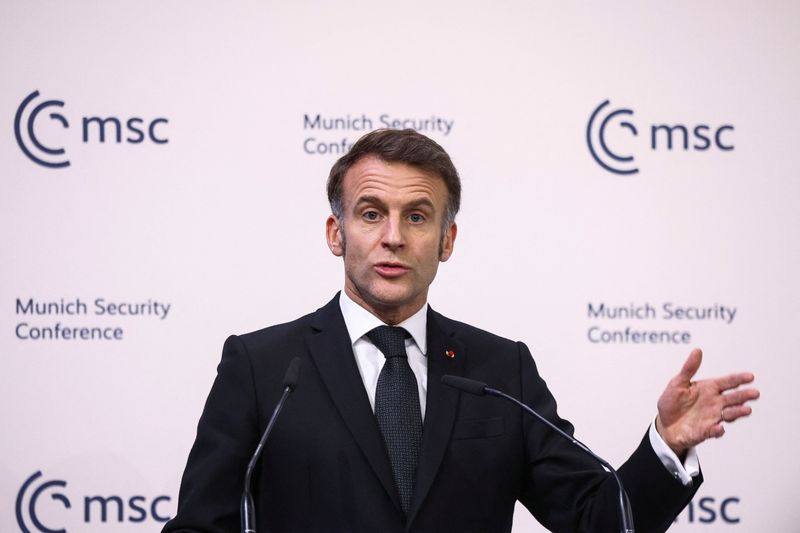
Macron urges calm, stressing the imperative for an end to the hateful rhetoric that, he warned, can lead to such devastating consequences.
The Tragic Incident: A Spark for Conflict
The fateful events unfolded outside a conference hosted by Rima Hassan, a prominent far-left member of the European Parliament, at the Sciences Po university in Lyon. On Thursday, February 13th, a 23-year-old man, identified by the government only as Quentin, was violently assaulted. He later fell into a coma and tragically died on Saturday, February 15th, from his injuries.
According to statements from the anti-immigration feminist association Nemesis, Quentin had been present to help protect their members, who were protesting against Hassan's event. Nemesis, a collective known for its proximity to the far-right, stated that Quentin was part of their security detail, asserting their right to protest against a figure known for her outspoken criticism of Israel. The family's lawyer further claimed that Quentin appeared to have been ambushed by "organised and trained individuals, vastly superior in number and armed, some with their faces masked," suggesting a premeditated attack.
Lyon prosecutors have launched an investigation into suspected aggravated manslaughter, though the perpetrators have yet to be identified. The precise circumstances of the brutal beating remain under investigation, adding to the tension and fueling speculation. This lack of immediate clarity has only intensified the political blame game, turning a deeply personal tragedy into a national controversy.
Political Blame Game: Divisions Deepen
Almost immediately, the political spectrum reacted with outrage and recrimination, each side pointing fingers and leveraging the tragedy to underscore their own narratives.
*
The Far-Right's Stance: Marine Le Pen, a heavyweight of the far-right National Rally (RN) and a three-time presidential candidate eyeing 2027, quickly condemned the incident. She called for the "barbarians responsible for this lynching" to be brought to justice "with the utmost severity." Nemesis, the group Quentin was affiliated with, went further, accusing members of a local anti-fascist association – which had been banned by the government in June – of being behind the killing. Their rhetoric painted a picture of targeted violence by extremist elements of the left.
*
The Conservative Perspective: Bruno Retailleau, head of the conservative Republicans party and a declared candidate for the 2027 presidential election, squarely blamed the far-left. His statements implied that the incident was a direct consequence of the escalating radicalism within certain left-wing factions.
*
The Far-Left's Counter: Jean-Luc Mélenchon, leader of the far-left France Unbowed (LFI) party, of which Rima Hassan is a member, reported that some of his party's local offices had been "attacked" following the statements made by Retailleau and Le Pen. While he did not provide details, his comments hinted at a tit-for-tat escalation of aggression. Rima Hassan herself had called for a thorough investigation and for the perpetrators to be brought to justice, echoing the demand for accountability across the political divide.
This rapid descent into mutual accusations highlights the fragility of political discourse in France, where ideological lines are increasingly drawn with stark animosity. In this environment,
Macron demands justice, but his plea is set against a backdrop of deeply entrenched partisan divides that threaten to overshadow the pursuit of truth and justice.
Macron's Appeal for Unity Amidst Discord
Against this backdrop of escalating tensions, President Emmanuel Macron swiftly intervened, leveraging his platform on X (formerly Twitter) to make a powerful appeal for de-escalation. "It is essential that the perpetrators of this ignominy be prosecuted, brought to justice and convicted," Macron stated unequivocally. He described Quentin as the victim of "an unprecedented outburst of violence," emphasizing that "Hatred that kills has no place among us. I call for calm, restraint and respect."
Macron's direct intervention underscores the gravity of the situation. A presidential call for calm is not a common occurrence in the immediate aftermath of such incidents unless they carry significant national implications. His message sought to transcend partisan bickering, urging all sides to remember fundamental principles of justice and civility. By framing the incident as an act driven by "hatred that kills," he aimed to shift the focus from political score-settling to a collective condemnation of violence, regardless of the perpetrators' affiliations.
The president's urgent call reflects an understanding that such events, if left unchecked, can metastasize into broader social unrest and further erode the fabric of French society. His leadership in this moment is crucial for anchoring the national conversation in the principles of justice and mutual respect, reminding everyone that the pursuit of political goals must never justify violence. Ultimately,
Macron urges calm as a vital step towards preventing further escalation and ensuring the integrity of the democratic process.
The Road to 2027: Escalating Tensions and Political Stakes
The tragic death of Quentin serves as a stark reminder of the escalating political polarization defining contemporary France. With the 2027 presidential elections already on the horizon, this incident offers a grim preview of the charged atmosphere that candidates will navigate. The far-right and far-left, both eyeing significant gains, are adept at harnessing public sentiment around such events to bolster their bases and attack opponents.
*
Polarization's Impact: The incident is likely to be weaponized by both extremes, exacerbating the divide between those who fear the rise of xenophobic nationalism and those who decry the perceived radicalism of the left. This dynamic risks creating an environment where nuanced debate is stifled, replaced by emotionally charged accusations.
*
Challenge for the Center: For centrist parties and the government, the challenge is immense. They must not only ensure justice for Quentin but also demonstrate a capacity to unite a fractured nation and address the root causes of this growing animosity. Failure to do so could further empower extremist voices.
*
Protecting Democratic Discourse: The incident also highlights the need for stronger protections for freedom of assembly and speech, while simultaneously clamping down on violence. Political events must be spaces for vigorous debate, not battlegrounds. Citizens, too, have a role to play in rejecting hateful rhetoric and promoting respectful engagement, even in disagreement.
This tragedy forces France to confront the dangerous consequences of unchecked political antagonism. The upcoming elections will not only be a contest of policies but also a test of the nation's ability to maintain social cohesion amidst profound ideological differences.
In conclusion, the death of Quentin has sent shockwaves through France, exposing deep ideological fissures and igniting a fierce political battleground. President Emmanuel Macron's urgent appeal for calm and restraint is a critical call to de-escalate tensions and ensure justice prevails. As investigations continue and the political fallout deepens, this incident serves as a grim warning of the challenges facing France on its path to the 2027 elections. The imperative now is for accountability, respect for the rule of law, and a collective commitment to fostering a political environment where disagreements are resolved through dialogue, not violence.